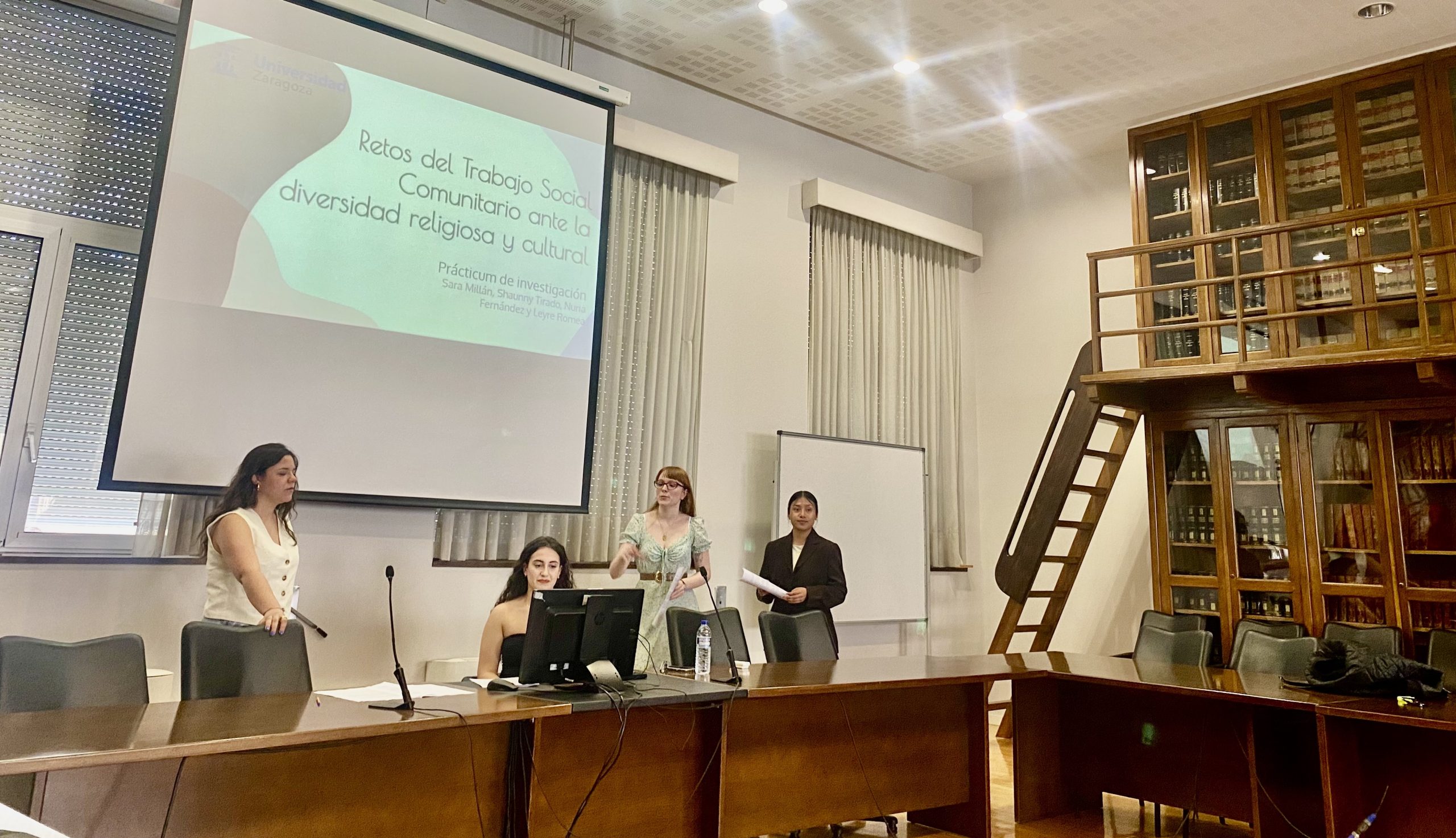
As we have already indicated in our previous News of 1st March, The exhibitions of the work carried out by students of the Prácticum subject of the Social Work Degree have finally taken place.
All our students chose LICREGDI as their placement destination, and their topics were related to freedom of belief, diversity management, and social work.
We wanted to highlight the excellent work done by the students, both in the development of their projects, in which they have carried out surveys and personal interviews, as well as in the presentations they have magnificently delivered.
Given the great significance and relevance of the topics, we are leaving two summaries that the students have kindly prepared and sent to us, which we hope will also be of interest:
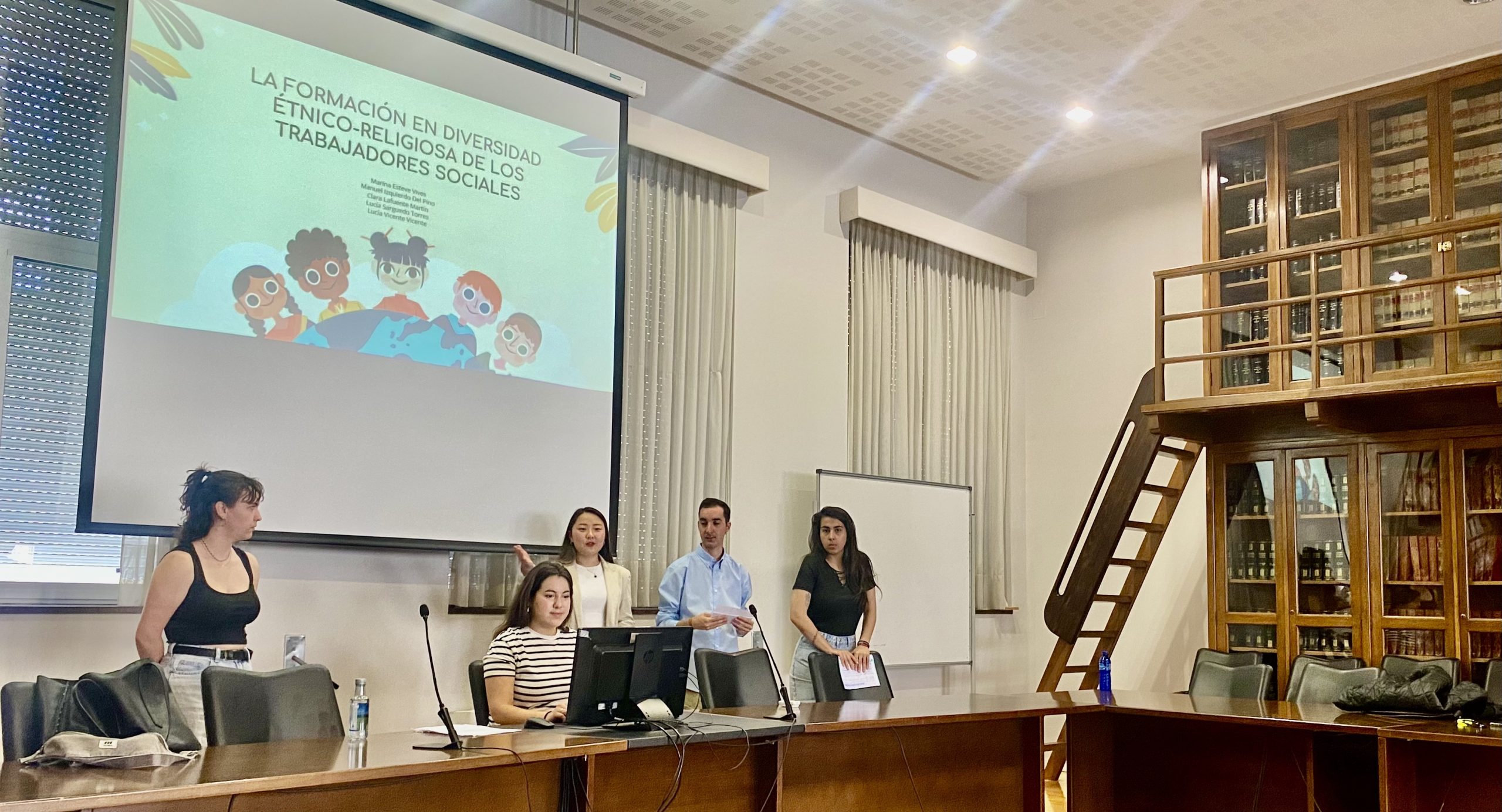
Ethnic-Religious Diversity Training for Social Workers
- Marina Esteve, Manuel Izquierdo, Clara Lafuente, Lucía Sarguedo and Lucía Vicente
Firstly, at the planning stage, we have defined what we want to study. To do this, we investigate whether theories already exist that explain what we want to address. If no current theories are found, we turn to similar or useful ones to formulate hypotheses. It is essential to delimit the problem (what we will investigate and from what perspective) in order to choose between an abstract and general theory, or a specific hypothesis.
Regarding the design, this is captured in a research project, which is an advanced schematic plan on what to do and how to do it. In this phase, we establish the objectives (general and specific), define the study universe, and determine the sample size and type. Furthermore, we select the techniques and resources for data collection and analysis.
The next step is data collection, for which we built the necessary instruments, such as the questionnaire. These questionnaires were created on the Google Forms platform and sent via email and messages to the study population.
Challenges of Community Social Work in the Face of Religious and Cultural Diversity
- Sara Millán, Shaunny Tirado, Nuria Fernández and Leyre Romea
To examine the challenges of Community Social Work in contexts of religious and cultural diversity in Aragonese territory, it has been decided to focus on the evangelical and Muslim communities in Aragon due to their high presence. Using a primary focus on semi-structured interviews with social work professionals, educators, and community leaders, the study aims to identify the needs, demands, and perceptions of inclusion of these communities, as well as to evaluate opportunities for designing effective and innovative social intervention programmes.
The results reveal the need for more training courses and the creation of spaces for interaction between communities. The need for support in learning about the Roma ethnic group and the Muslim religion is also identified, which could improve social cohesion. These findings aim to inform the design of future policies and programmes that promote integration and social well-being in a context of religious and cultural diversity in Aragon.